Why monks switched dairy farming for brewing... the fascinating story of Tynt Meadow

It was 2014 when the monks at Mount St Bernard’s Abbey in Leicestershire took the decision to stop dairy farming, which had been the principal source of revenue to keep their monastery sustainable for over 160 years.
The proliferation of similar farms around their 200-acre estate and plunging commercial prices for milk were just too much and the monks had to work out what they might do next.

Well, apart from the obvious – devoting their life and work to their religion – monks had historically brewed beer.
So it was that in 2017 a brewery called Tynt Meadow, named after the land the monastery sits on, near Coalville, was launched.
They did not do things by halves. Seeking advice from existing monastic breweries abroad, they set out to have their enterprise accredited as the only Trappist brewery in Britain, of which more later.
Humility is at the heart of a monk’s life, so they did not court publicity but the story was so good that publicity found them, plenty of it, in national newspapers, on TV and radio and on websites.
Consequently, Tynt Meadow, eight years on, is a great success yet not as big a one as it might be, since the monks’ only purpose for the brewery is to make enough money to keep the monastery going.
Here are my thoughts after taking part this week in perhaps the most fascinating brewery tour I have been on.
I’d visited Tynt Meadow a few times before but there is so much more to this tour than most, simply because of that back story.
The history has been documented in detail, not least on their own excellent website but, in short, the Cistercian order at Mount St Bernard’s was founded in 1835, in a near-derelict cottage around 300 years after Henry VIII had purged the country of monasteries and Catholicism. The monastery itself opened in 1844 and gained Abbey status four years later.
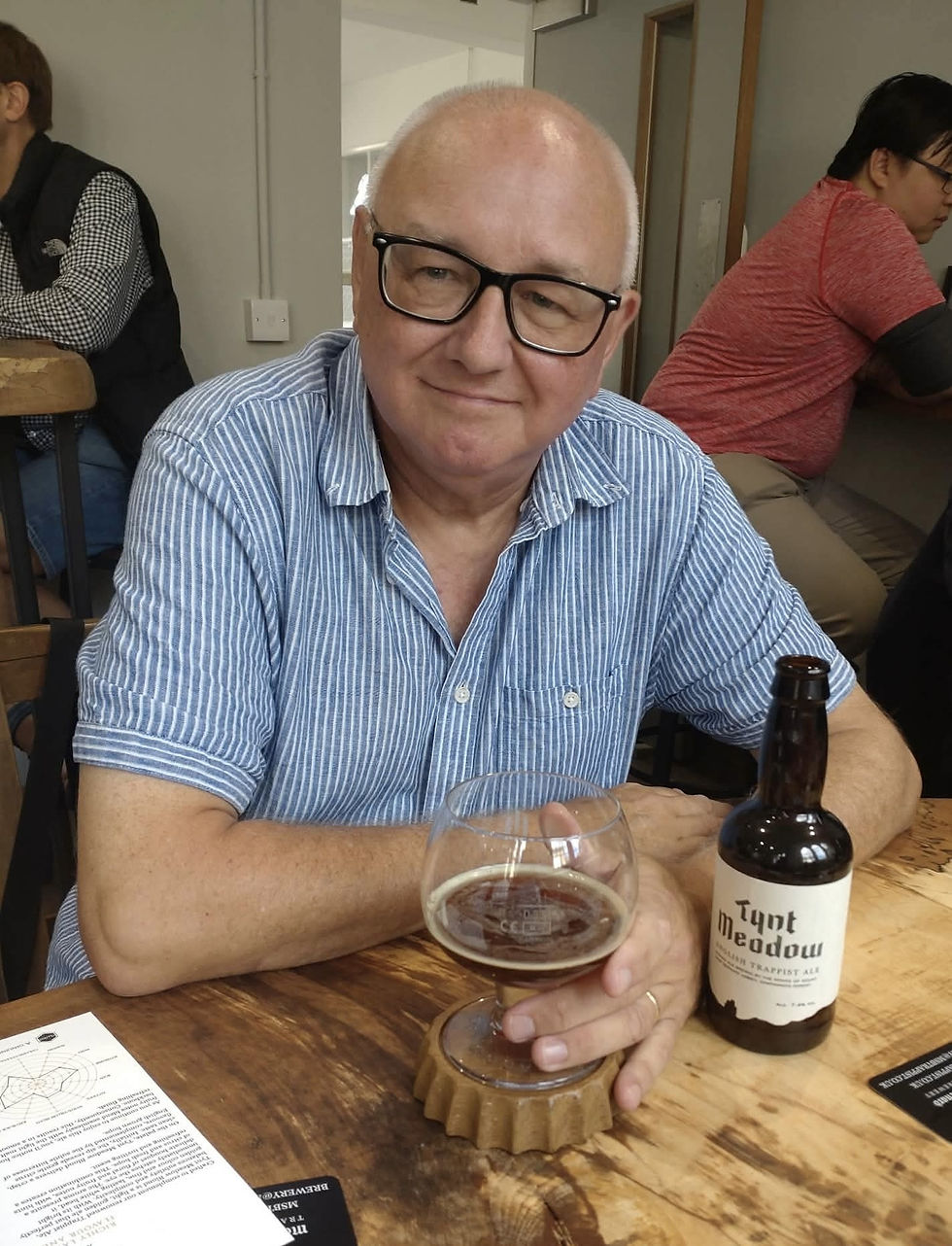
Working in the area as I did for a time in the 1980s, you’d be aware of the abbey, you’d sometimes see the monks about town doing their business but that business was less well-known.
As the brewery has grown – it is scheduled to grow between 5% and 8% a year – so not all of the work is now done by monks, although they oversee it and have the final decisions on everything.
A party of 21 of us were shown around by Peter Grady, the brewery and operations manager. A big part of the success of the tour is that he’s very good at it, packing in the detail at a pace but with an entertaining lightness of touch.
We had been hit by a deluge a few minutes before the tour was to start outside in the grounds, gone as fast as it arrived. Peter waved an umbrella around: “Mount St Bernard’s umbrellas, normally £25, on special offer today at £50!” he announced. A good icebreaker.
I couldn’t resist asking if he, too, was a monk. No, he said: “I try to live by a lot of the principles and I pray but I also have a wife and children at home. I guess I’m a bad Catholic but I feel guilty about it so perhaps that makes me a good one!”
It’s not a new joke but he told it well and the atmosphere was set.
Two deep wells provide the brewery’s water. Two wind turbines provide all the electricity required to run it. Spent grain is carted off for local farmers to feed their livestock, common enough with country breweries.
The brewing side is much like that of many small outfits: big, impressive shiny kit (theirs mostly from Germany) crammed into rooms which were not originally for the purpose, overseen here by a small statue of St Arnold, the patron saint of brewers, on one wall.
“It’s a monastery with a brewery,” Peter emphasised. “We could sell three or four times what we make, easily. But we’re not looking to get a supermarket listing tomorrow to make a penny a bottle. The brewery exists to support the community, not as a commercial enterprise as such.
“90% of what we make is pre-sold three months in advance and 60% is exported. South Korea is a new market we are looking into.
“It’s a Trappist principle that we grow the business 5-8% every year and if we keep doing that we’ll need new equipment in 10 years but we’re not worrying about that yet.”
They make only two beers, the original Tynt Meadow Ale, a rich, dark concoction at 7.4% and a later addition, a blonde, at £5%. I prefer the former.

At the tasting session afterwards, we were offered a five-year aged version of the ale and it is markedly different, with stronger-flavours. I preferred the subtlety of the younger one but it’s all about opinions.
It struck me that while operating like monks is not essential, a number of “here today, gone tomorrow” failed breweries might still be around if they had looked harder at sustainable growth rather than racing for growth in recent years.
That said, Trappists are different. They could be making cheese or honey as well as beer or anything else they can sell as long as they adhere to three rules: the product is made on site; it is overseen by monks; and it is not for profit. An International Trappist Association ensures members work to these rules.
Any money left over after sustaining the monastery, paying wages and allowing for necessary maintenance and upgrading of the brewery goes to charity. The monks don’t shout about which charities – they don’t shout about anything – but Peter pointed out that the list of benefiting charities is in the company accounts if anyone wants to look.
And yet, sustainable as Tynt Meadow clearly is, Trappists are not immune to commercial pressure or demographics.
There were 12 Trappist breweries in Europe when Tynt Meadow launched. Now there are eight, five in Belgium, one each in the Netherlands, Italy and Britain. Dwindling numbers of monks have accounted for some closures.
This does not appear to be a problem at Mount St Bernard’s. It is a beautiful place, which you can appreciate whether religious or not, and there is, perhaps inevitably, an air of calm about it.
It’s on our doorsteps (local readers) and if you’ve never been, I recommend a look. I especially recommend shelling out £30 for the tour. Money well spent in my book.
Plenty more at the Tynt Meadow website: https://msbtrappist.co.uk
As always, feel free to subscribe via the home page if you haven't already. It's free and all you get is an email letting you know when I've written something.


Another good read Colston!